
The essentials
Choose clean, good-quality hay suitable for your rabbit and keep it freely available. Check storage and replace soiled portions. A rack or bag should make access easier; reduced appetite cannot be addressed simply by changing an accessory.
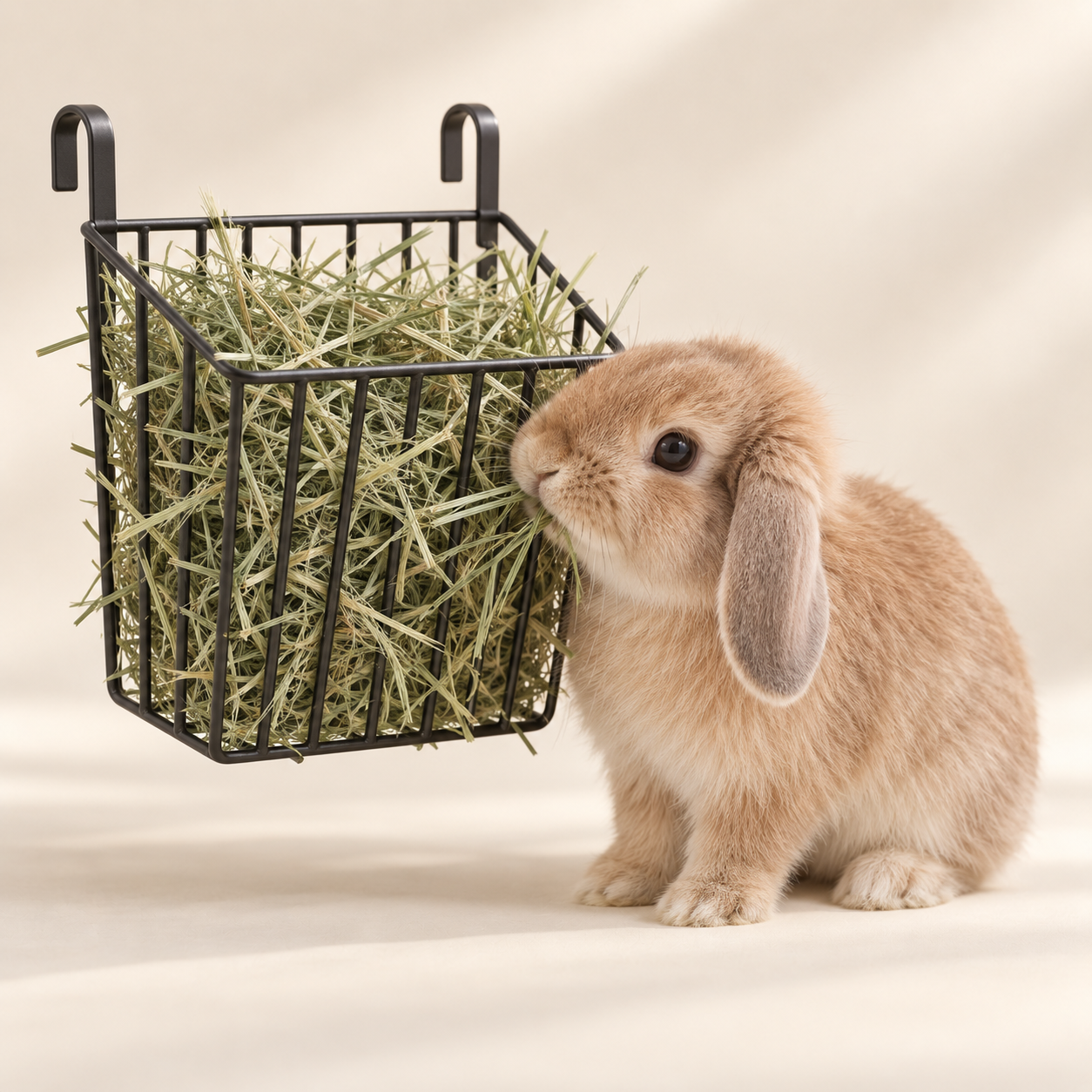
Hay at the heart of the day
Hay is a central rabbit food rather than decoration for the living space. It encourages prolonged chewing and supplies fibre within an appropriate diet. Your companion should be able to find it throughout the day, including after finishing other foods. Choosing good hay means checking its quality and whether your rabbit actually eats it. An impressive packet is of little use if it remains untouched in an awkward corner. Start by watching usual consumption and how your rabbit selects individual strands. Do not remove necessary foods in an attempt to force a preference, and consider the whole feeding routine when making adjustments.
Meadow hay and timothy
For a healthy adult rabbit, grass hays such as timothy and suitable meadow hay are common choices. Texture, strand length and plant variety differ between cuts and harvests. Variation is not automatically a problem: it can help you discover your companion’s preferences. Avoid judging hay only by colour or a commercial name. Look for clean, dry hay with a pleasant plant smell. A rabbit with a medical condition or particular nutritional needs may require individual guidance from a veterinarian. General advice should not replace that assessment, especially if you are managing a previous health problem or making changes to a prescribed feeding plan.
Alfalfa needs a different approach
Alfalfa is a legume with a different nutritional profile from grass hay. It should not automatically become the everyday hay for every adult rabbit. Some young animals or particular circumstances may require specific choices, which should be discussed with a professional. Do not carry a baby rabbit’s diet unchanged into adulthood simply because alfalfa remains popular. Age, body condition, other foods and health history all matter together. When welcoming a new rabbit, ask what they have been eating already. This allows a measured transition instead of a complete dietary change on arrival, while you also learn how they settle into their new environment.
Look, smell and inspect
When opening a packet, look for dry material and a pleasant plant smell. Mustiness, damp patches and excessive dust are warning signs. Do not offer questionable hay after removing only the visibly damaged section: the problem may extend beyond it. Gently shake a small handful over a light surface to assess loose particles without spreading dust near your rabbit. Strands may be fine or firmer; what matters is that the supply is suitable, reachable and accepted. Hay packed tightly into a holder may need loosening. Always inspect a new batch rather than assuming it is identical to the previous packet from the same brand.
Preserve quality in storage
Store hay in a clean, dry place away from moisture. Avoid sealing damp hay inside an airtight container and keep supplies away from condensation. Follow the supplier’s storage directions and use a simple rotation: finish the oldest batch that remains in good condition first. Do not buy a huge quantity before knowing whether your rabbit enjoys that harvest. A smaller trial can reduce waste. The daily supply also needs protection from spilled drinking water and urine. Keep the main stored supply separate from the toilet corner so that one wet portion does not affect the rest of the packet or bag.
Make access effortless
The holder matters as much as the hay inside it. Your rabbit should reach strands in a natural posture without climbing up or putting their head through a narrow opening. A metal rack can organise the supply, but bars and attachments need careful inspection. A three opening hay bag requires monitoring of its fabric and removal if chewing begins. Also offer a portion at floor level when your companion prefers that arrangement. Two feeding points may help in a large living space, especially when several rabbits share it. Observe access during ordinary feeding, not just immediately after you have filled the holder.
Encourage rather than force
For a rabbit showing little interest, try a fresh small portion, a different texture or a calmer feeding position. Introduce a new hay gradually alongside the familiar one and watch the response. Do not let an old supply become dusty simply because plenty remains in the holder. Limit simultaneous changes so you can understand which adjustment helps. Never withhold water or necessary food to force acceptance of a packet. If consumption falls substantially, particularly alongside fewer droppings, contact a veterinarian promptly. Repeated home experiments should not delay professional advice when the issue might be reduced appetite rather than a simple preference.
Separate preference from illness
A rabbit who prefers one cut may remain active, eat normally and produce their usual droppings. A rabbit eating less of everything, sitting still or appearing uncomfortable needs a different response. Dental difficulties cannot simply be corrected with chew sticks. Hay and enrichment have useful roles, but professional examination may be essential. Notice changes before they become dramatic: the quantity eaten, posture, food selection and frequency of feeding visits can all provide helpful information. Loss of appetite in a rabbit deserves serious attention even when it has started recently. Keep notes that you can share with your rabbit experienced veterinarian when seeking advice.
Keep the daily setup simple
Morning and evening, check the supply, remove soiled hay and add a fresh handful when needed. Clean the holder and inspect its attachments regularly. Our hanging metal hay rack and suspended bag offer two different arrangements; choose according to your rabbit’s habits and the available space. No holder suits every rabbit, and opening safety must be checked for your individual companion. Leave room for simple discoveries: appropriate hay can be offered in several accessible ways. The best hay station is clean, easy to reach and genuinely used each day. Keep observing how your rabbit eats and be ready to change the presentation if their needs change.
Further reading: general guidance from Rabbit Welfare Association & Fund and House Rabbit Society. This guide does not replace individual advice from your rabbit veterinarian.
Rabbit Welfare Association & Fund · House Rabbit Society